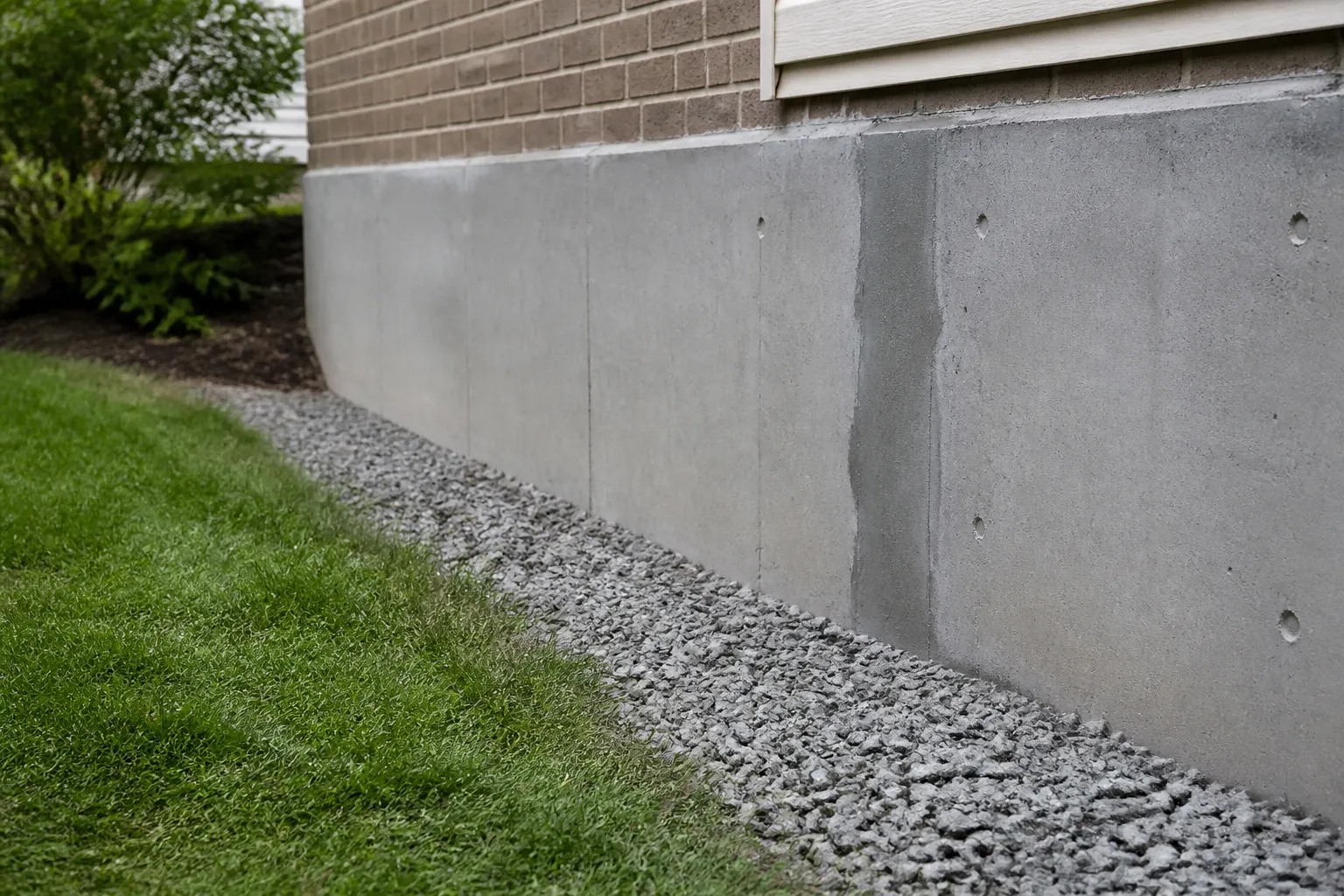
Cracks along a foundation, doors that stop latching, or a slab that seems to have shifted are signs worth paying attention to. When those changes start showing up around a home, the next step is not guesswork. It is a careful look at what is moving, why it is moving, and what repair approach makes sense for the structure.
In The Mud Concrete helps homeowners across Palo Alto, CA respond to foundation concerns with direct, practical repair work. If the damage is tied to settlement, surface separation, or concrete deterioration, we can assess the problem and explain what needs to happen next so you can move forward with a clear plan.
Foundation trouble rarely starts with one dramatic event. More often, it shows up through small changes that become easier to spot over time. Some signs are visible at the slab or stem wall, while others show up inside the home as alignment issues.
Not every crack means a structural repair is needed, but movement should be checked before it becomes more expensive to address. A foundation issue can affect slabs, walkways, retaining elements, and other nearby concrete surfaces too.
Foundation repair starts with identifying the source of the movement rather than chasing surface symptoms. We look at the shape of the damage, where it appears, and how the surrounding concrete is behaving. That helps separate cosmetic cracking from settlement or structural failure.
We review crack patterns, edge separation, and any signs that sections of concrete have shifted relative to one another. A straight crack does not tell the same story as a stair-step pattern or a widening gap near a load-bearing area.
Foundation concerns often connect to other work around the property. Sidewalk replacement, retaining wall construction, concrete slab pouring, or concrete resurfacing may come into play when adjacent structures are also affected by movement.
We also consider the surrounding concrete layout, any previous demolition work, and whether dirtwork or excavation is needed to reach the area that needs repair. The goal is to understand the condition of the foundation as part of the full structure, not as a single isolated crack.
Foundation repair is not one fixed procedure. The right approach depends on how far the damage has progressed and what kind of concrete system is involved. In some cases, the answer is repair and reinforcement. In others, it may involve removal and rebuilding of damaged sections.
When cracking is present but the surrounding structure remains stable, we can address the damaged concrete and help restore a more sound surface.
If parts of a slab or supporting concrete have deteriorated beyond repair, selective demolition and replacement may be the more practical solution.
For more advanced damage, rebuilding portions of the foundation-related concrete can help return the area to a usable condition and reduce continued separation.
When the structure is stable but the finish is worn or damaged, resurfacing can improve the appearance and help protect the repaired area.
We focus on the condition that is actually present, not on adding steps that do not serve the repair. That keeps the project aligned with the problem and the property.
Homeowners often want to know what the process looks like before they commit to repair work. A clear sequence helps reduce confusion and makes it easier to plan around the project.
We start by looking at the concrete damage and listening to what changes you have noticed around the property.
Next, we determine whether the issue points to settlement, cracking, deterioration, or a combination of factors.
Once the issue is clear, we outline the scope of work, whether that means targeted repair, demolition, replacement, or related dirtwork and excavation.
We complete the repair using the method that fits the condition of the structure, with attention to the surrounding surfaces that may be affected.
After the work is complete, we check the finished area and review what was repaired so you understand the result.
That straightforward process helps keep foundation repair manageable, even when the damage has spread across several areas.
Foundation movement does not stay neatly where it started. A crack at one point can shift stresses to another, and a damaged slab can influence adjacent concrete features such as driveways, sidewalks, or retaining walls. Waiting too long can turn a focused repair into a larger reconstruction project.
Timely repair can help reduce the spread of cracking, limit further separation, and make the property easier to maintain. It can also improve the appearance of the area, which matters when the damage is visible from the driveway, entry path, or patio edge.
In The Mud Concrete has spent over 20 years working on concrete repair and reconstruction, including the kinds of foundation-related problems that show up when a structure begins to move. That experience helps us approach each job with a practical eye toward what needs to be removed, rebuilt, or restored.
Foundation repair often connects to other concrete services around the same property. When movement affects nearby areas, a complete solution may include more than one type of repair.
By looking at the full concrete layout, we can keep the repair plan realistic and avoid piecemeal fixes that do not address the underlying problem.
Palo Alto, CA homeowners looking at foundation damage often want a contractor who can explain the repair clearly and handle the concrete work without unnecessary detours. That is what we aim to provide. Whether the concern is a cracked slab, a shifting edge, or deterioration tied to a larger concrete feature, we keep the focus on the structure and the repair needed to stabilize it.
In The Mud Concrete offers free estimates for customers who want to understand the condition of their concrete before moving ahead. If you are comparing repair options for a foundation issue, we can help you get a clear picture of what is happening and what can be done.
For questions or to request a free estimate, contact In The Mud Concrete at +16504443101 or ickyinthemudd@gmail.com.
Cracks, floor unevenness, sticking doors, and separation at concrete joints are common indicators. The pattern and location of the damage help determine whether the issue is structural or surface-level.
Yes. Cracked slabs are often part of the same repair conversation, especially when the damage connects to settlement or movement around the home.
It can. If damaged concrete is too compromised to keep, selective demolition may be needed before replacement or reconstruction begins.
That is common. We can assess connected areas and determine whether sidewalk replacement, driveway work, or resurfacing should be included with the foundation repair.
The decision depends on the condition of the concrete, how far the damage has spread, and whether the structure still has enough integrity to repair rather than rebuild.
Yes, if the structural work is complete and the surface is suitable for finishing. Decorative concrete finishes can be considered after the repair plan is finished.
Get Started
Share what you need repaired, replaced, or rebuilt, and we will help you understand the next step for your concrete project.